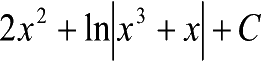
Find the antiderivative
Find the antiderivative shown WITHOUT the use of a calculator or computer system that does algebra. Explain your method clearly.

Find the antiderivative shown WITHOUT the use of a calculator or computer system that does algebra. Explain your method clearly.

View the solution


Blogs on This Site


 Like us on Facebook to get updates about new resources